In one of my recent Japanese lessons we were working on saying something like this:
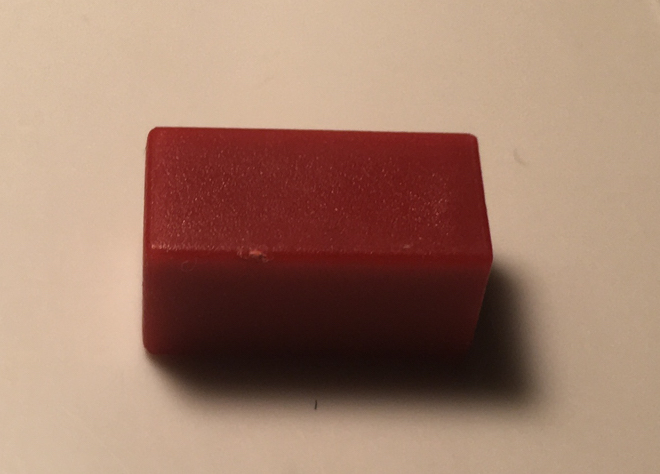
「短くて赤い棒」(a small red rod)
This was all well and good, but then our teacher invited us to describe the same thing as:
「赤くて短い棒」(a red small rod)
I found this inexplicably difficult. I remember feeling pretty strong resistance to reordering the words in this way, and I had no idea why I should find this so uncomfortable. But, I pushed myself, and after saying it a few times and then shifting to 「黒くて長い棒」(a black long rod) these sentences gradually started to feel less impossible.
I thought about it afterwards, and remained puzzled as to why I had been so reluctant to reorder what are some very familiar Japanese words.
It was only a few days later that I realised that the English neural structures that govern word order in my mind must have been kicking in and making me feel uncomfortable: just like every English speaker will have felt uncomfortable reading the title of this article. And as I practised and tried variations, I must have been building new parallel Japanese neural structures that don’t care about adjective order.
This kind of thing must be occurring all the time, when we learn a foreign language. We get asked to say things that violate the patterns from our native language that are encoded in our minds. This is going to make us at the least uncomfortable, uncertain and hesitant and possibly make us reject and disbelieve what we are being taught.
Indeed, I now realise that what my French teacher occasionally hears me say – ‘You cannot be serious!’ – when he gives me positive feedback after I’ve forced myself to say a French sentence that seems impossibly weird to me, must reflect the same effect: incredulity that French could possibly be structured in such weird ways.
So, students are never going to feel comfortable speaking a foreign language until they have grown the new neural structures needed, in parallel to their well-established native ones. And it’s clear that neural structures like these are not grown by memorising a rule: no English speaker knows the ‘rule’ for the order of adjectives but nevertheless they never make a mistake and infallibly recognise when the order is wrong.
So now after a week or two, practising saying this kind of thing in Japanese and getting feedback, I no longer feel any particular resistance to describing the animal in this picture by saying things like:

「黒くて大きい犬」(a black big dog)
or
「大きくて黒い犬」(a big black dog)
Indeed, in some ways I prefer the first of these … I may be wrong about this, but it seems to me that in Japanese this way of talking, perhaps, emphases the blackness of the dog which is what strikes me most about the picture.
I found the whole process very instructive. When students are learning a language they must have to deal with this kind of thing every step of the way. And having experienced this clear example in my own learning, I’ll be more aware of it next time I’m teaching, or next time I’m faced with those ‘bizarre’ sequences of French pronouns etc.