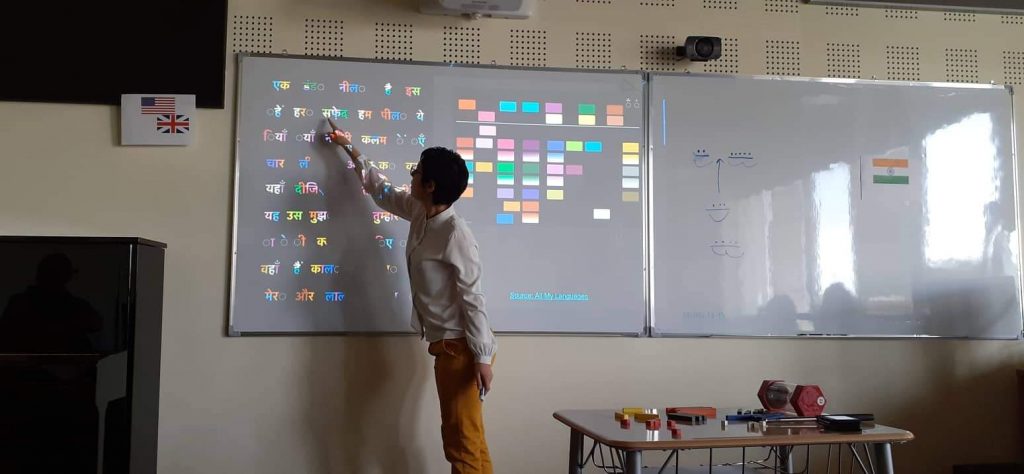
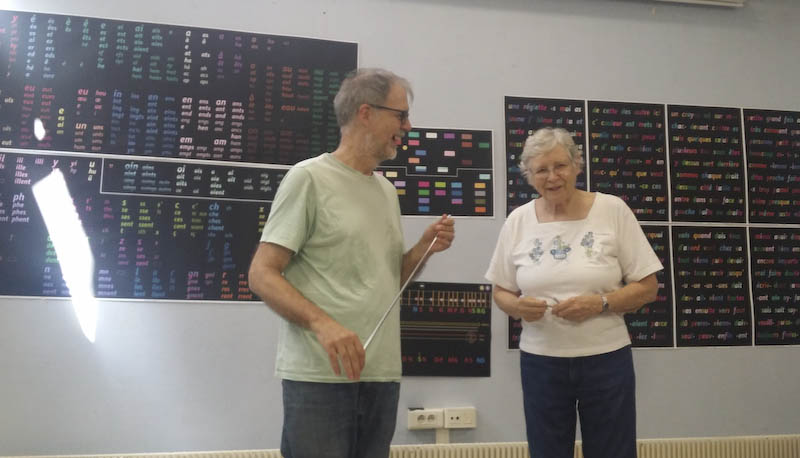
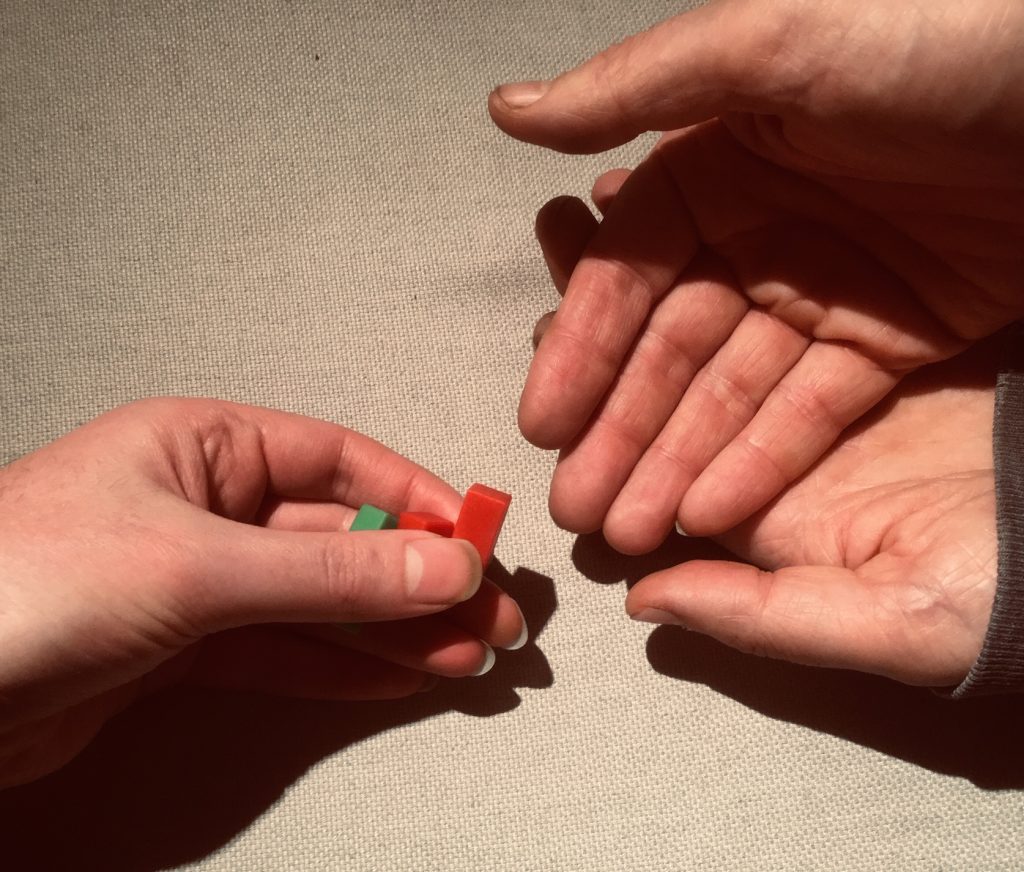
Really pleased that Fanny Passeport used the draft Hindi Silent Way charts I’ve been working on for a session “Less teacher Talk, More Student Voice” at the Central and East European Schools Association Assessment Summit hosted in Bulgaria recently. The idea was to engage participants in a Hindi lesson using the Silent Way. This is a great way to enable people to experience the power of this way of working and provoke new ideas about how they could work with their students. Here’s a photo from the event.
I’m particularly pleased to have made contact with new colleagues to collaborate with on this project. Creating these kinds of materials is so much easier as a collaborative and shared project – working on your own it’s very difficult to judge whether the choices you are making are good ones or merely idiosyncratic reflections of one’s own strengths and weaknesses. So with this encouragement I hope to be able to push forward this Hindi project before the end of 2019!
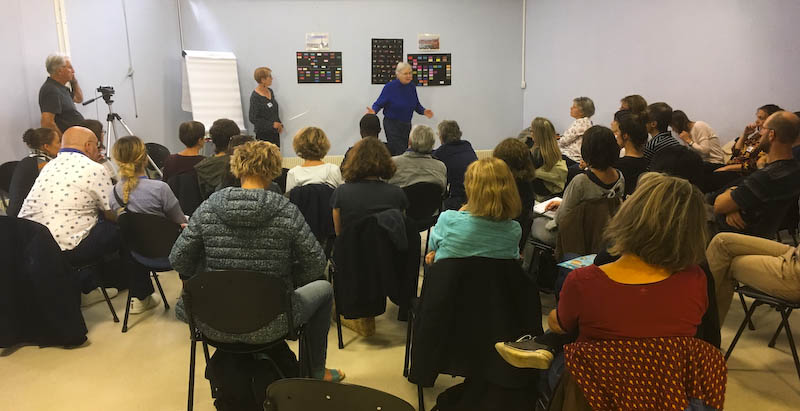
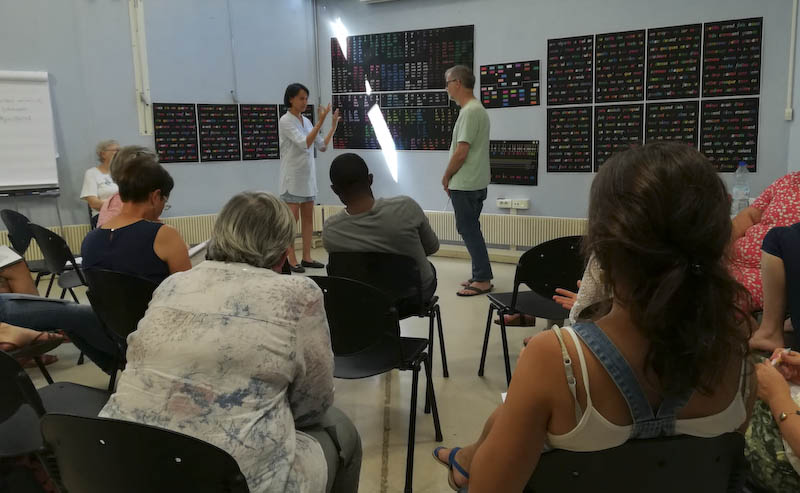
What a privilege to work with Dr Roslyn Young at the 4 day course she gave in Grenoble on the Silent Way for teachers and volunteers working with migrants, especially those who are non-readers and non-writers!
We started with some Hindi taught using the Silent Way to remind us all of the experience of starting from scratch in a language we know nothing about and which uses a completely unfamiliar script. And, of course, to give everyone the experience of the Silent Way and the power of its key foundations: provoking awarenesses rather than distributing knowledge; and retention rather than memorisation.
We then explored the tools available for Silent Way teachers. For example:
‘silence’ – through the precise use of silence we throw the responsibility back on the student to produce the language and allow the teacher to take up their proper role as coach, guide and guardian of quality. All this means the student is far more likely to build far more quickly accurate criteria for the language. Silence also entirely eliminates a common sin of teachers of any subject – ‘teacher talk’ and explanation.
‘Sleep’ – through teaching language as a knowhow rather than knowledge we ‘charge’ the human mind with experiences which the mind is ready, and supremely able, to integrate and install during our periods of sleep.
‘Mental images’ – all of our charts and how we use them are designed to enable the students to build mental images of whatever they are learning. For example, working with a sound-colour chart will leave the student with a mental image, both visual and kinaesthetic) of the complete inventory of the sounds of French.
‘Meaning not translation’ – by starting with tangible objects in unambiguous situations we ensure that meaning comes before the language, and therefore students and teachers escape from any need for translation – everyone can see that there is a red rod in front of them, or that Clara is taller than Juan, or that the chair is behind the table etc. We need to escape from translation in every language class, but nowhere is this need so obvious as where we have no common language with our students – a situation which is so common when we are working with migrants.
‘Retention not memorisation’ – humans are naturally retentive organisms and our powers of retention are effortless, effectively limitless and normally operate flawlessly. That is why in the Silent Way we avoid memorisation – memorisation is hard work and often faulty. One of the functions of our word charts is to enable our students to become familiar with the functional vocabulary of the language and acquire it through use, thus escaping from the memorisation trap. Since the functional vocabulary is in effect the grammar of the language, working with these charts is incredibly powerful to give the students the capacity to use the language creatively
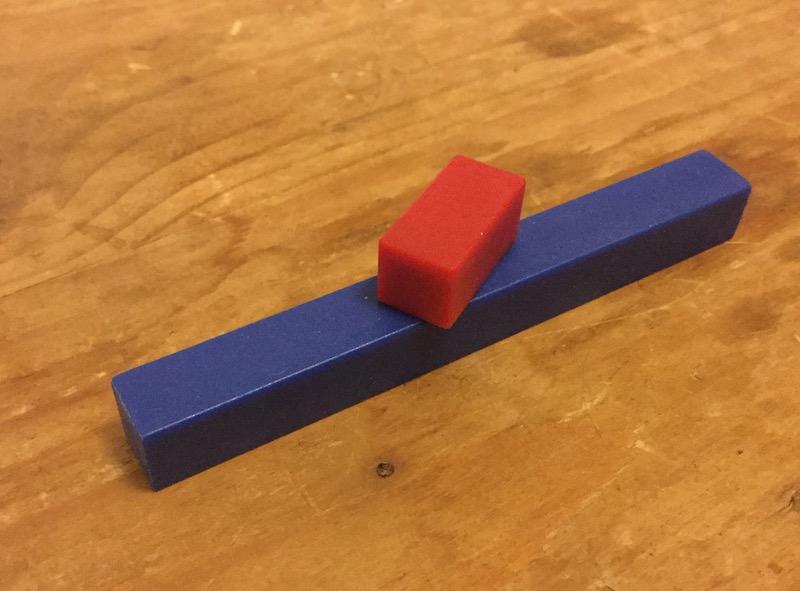
‘The curiosity of the students’ – as soon as possible we pass over to the students responsibility for the content of the lesson and encourage them to create and test hypotheses to express what they perceive or think or feel. This can be done even at the earliest stages … for example I may perceive that a red rod is on a blue rod, whereas for you the blue rod is under the red rod, whereas for someone else they may perceive simply that there are a red and a blue rod on the table. All these statements are true of the situation. What is important is that we help students express what they themselves think or perceive in correct, true, well-pronounced language.
‘Economical correction’ – we try to do the minimum possible so that the student corrects themselves or discovers the correction themselves. It may be that the student cannot correct themselves without a new word or element of the language being put into circulation – but very often that isn’t the case, and often even just raising an eyebrow is sufficient for the student to find what is needed within themselves. Working in this way rapidly strengthens students’ inner criteria and takes them one step further towards becoming independent of us – just giving them the ‘correct answer’, which is such a temptation for all teachers, has nothing of this power.
Finally, the students on the course got a chance to try out what they’d been working on for real with a live non-native speaker of French ie me! This was a very inspiring end to the course – for me, because I got my French improved and some much better criteria installed for aspects of French – and for the students because they saw and experienced how they could work in this way to improve a non-native speakers french at any level.
In addition … I made a lot of new friends! Looking forward to returning to Grenoble for more fruitful partnerships in the future!
The other day I was lucky enough to work with the East Lothian ESOL team giving them a workshop on the Silent Way as part of their CPD.
We’d agreed that it would be an experiential workshop in which the team would take the first steps in learning a language they were completely unfamiliar with. That way the participants would experience for themselves the power of the Silent Way approach … and at the same time re-live how disorientating it must be to be plunged, for the first time, into a language that isn’t your own.
We started the workshop listening to a very short recording of someone speaking some Hindi … which was, of course, at this stage largely meaningless to the students.
We then started to experiment with using our breath, voice and mouths in totally new ways to find the sounds of Hindi – this phase of experimentation; trial and error with feedback from a teacher; and learning to use yourself differently, to suddenly sound different is incredibly useful if you want to develop good pronunciation in a foreign language.
Cuisenaire rods – which have a huge variety of uses in teaching languages
We then started to make sentences about some Cuisenaire rods. These rods are really useful for teaching grammar through situations (see also). Because they are easily manipulable, an infinite variety of situations can be created. And because they are tangible and visible to everyone, there is no doubt about the meaning of the language we create about them, without any need for verbal explanations whatsoever. Everyone’s perception alone is sufficient.
And since meaning comes first … when we speak, the meaning is in our mind first and the language flows from what we perceive or think … we are getting the language game the right way round. Meaning first; language after.
I was really impressed hearing gradually more and more elaborated sentences being said as we gradually expanded the language the students were practising. More than anything I was impressed by how hard everyone was working as they tried to coordinate bizarre and unusual movements of their mouth … to make unfamiliar sounds, strung together on a totally different way of using the breath, to produce coherent descriptions and instructions in this language from a culture half way round the world!
This way of learning makes demands on all the students. They have to stay present to the task, they have to experiment and try out unfamiliar actions that will feel strange but, because it’s all learning by doing, the memorisation burden is almost eliminated and, as the students practise, they progressively establish the ‘knowhow’ to express themselves in the new language.
By the time we’d finished the workshop amongst other words, the words एक, दो, तीन (one, two, three) had been used so when I played the recording again at the end, the team were able to recognise that the speaker was counting in Hindi …
One hour is far too short a time for this amount of work, but congratulations to the students for making it from probably never having heard a word of Hindi to being able (with just a little help) to give instructions such as:
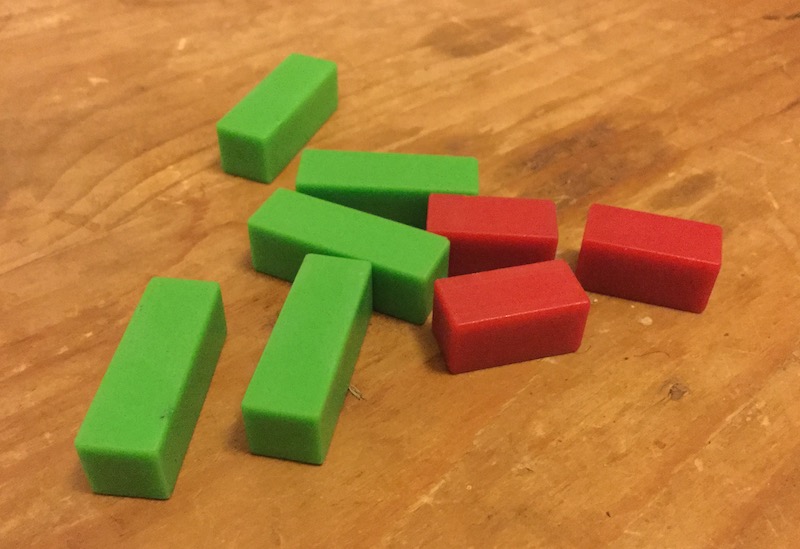
‘[colleague’s name] मुझे दो लाल डंडियाँ और एक हरी दीजिए ।’
and with all of us knowing exactly what was meant by this, without the intervention of any translation whatsoever during the whole hour. A great way of teaching grammar!
Thanks once again to East Lothian Council’s ESOL team for the opportunity to work with them.
PS. It seems superfluous to give the translation of the hindi above, but it is: ‘[colleague’s name] please give me two red rods and a green rod!
I met with my Hindi guru, Harjyot Singh, today. We’ve been working together since December on a) generating Silent Way charts for Hindi and, in parallel, b) me learning Hindi. We’ve met 8 times for exactly one hour each time – one hour is plenty for me to focus and absorb what I need to. Outside of that time I’ve been producing charts which we test when we meet. And I’ve done a bit of practice in between meetings/lessons, mostly on pronunciation.
I took the approach of asking ‘what language do I need to be able to say x, y and z?’ I used the book ‘L’anglais avec l’approche Silent Way’ by Roslyn Young (currently being translated into English), which gives examples of the situations and sentences that are commonly generated from each Silent Way Word Chart, as a guide and then made hypotheses about the language I needed to say these in Hindi using a couple of text books. Each time I met with a Harjyot I tried to generate sentences about a concrete situation and he gave me feedback about grammar, word choice, pronunciation, melody and naturalness. I used this feedback to develop a feel for the language and revise the materials I was creating as necessary. Each time I felt more confidence about a wider range of the language.
Hindi Silent Way Chart 1
For example, chart 1 enables me to describe an infinite variety of simple situations such as these ones below:
‘यह लाल डंडी ईस नीली पर है ।’ ‘This red rod is on this blue one.’
‘तीन लाल डंडियाँ और पाँच हरी टेबल पर है।’ ‘There are three red and five green rods on the table.’
Simple sentences, but the beauty is that, having been coached with feedback from my Hindi guru, I can confidently create these sentences for myself using what’s on the charts. A lot of this comes from the fact that when we work together he only gives me the minimum amount of help to perfect the sentence – in terms of grammar, pronunciation, naturalness – that way, because I do most of the work, I develop more quickly accurate criteria for correct Hindi.
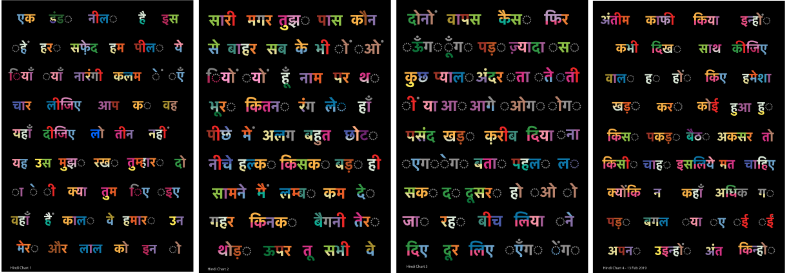
Hindi Charts 1 -4
Each chart extends the range of linguistic structures I can master. For example:
Chart 2 extends what I can say to include things like ‘behind’, ‘in front’, ‘on top’, ‘under’ etc.
Chart 3 gives me the verbs for ‘to come’ and ‘to go’ and access to the past enabling me to say things like ‘I took a red rod and gave it to him’ and the future so I can create sentences like ‘I will go outside’ etc
Chart 4 gives me a few more verbs such as ‘to do’ and how to say things like ‘I want’, ‘is needed’ etc
‘Much language with little vocabulary’
Caleb Gattegno
So far on these four charts I have only 190 ‘words’ (including the inflections I need). And since the charts will be displayed on the walls of a classroom, and the pronunciation of each word is evident from the colour coding, there will be minimal memory burden on the students. This means they can put their effort into using this linguistic material to express things they perceive and think, without the weight of memorisation – retention of the words will come as they use them. For more information about Silent Way charts for other languages click here.
What I found interesting was how, somehow, having got to the linguistic coverage of these four charts and having been coached in their use, I suddenly found myself able to talk about real things in my life, extending my linguistic reach from manufactured situations with Cuisenaire rods in the classroom to things like the following, which Harjyot and I worked on today:
मैं पहले मंगलवार को पेरिस से लौट के आया । I came back from Paris on Tuesday.
जब मैं पेरिस में था मेरी पत्नी को काम करना था । When I was in Paris my wife had to work.
आप को बाद में जिम करना है । You have to go to the gym later.
मैं अगले बुधवार को East Lothian Council में एक प्रिज़न्टेशन देने वाला हूं । Next Wednesday I will give a presentation at East Lothian Council.
All these things are a) true and b) now we’ve worked on them, correct and c) things I wanted to say. The only ‘words’ not in the 190 on the Charts are ‘Paris’, ‘Tuesday’ and ‘Wednesday’ (I have a separate chart for the calendar), ‘wife’, ‘gym’ which is easy because it’s the same as in English, and ‘presentation’ which is also the same as in English.
Not bad for eight hours of lessons (OK plus lots of work researching in text books and thinking about the language and how to learn it …).
‘Much language with little vocabulary’ indeed.
I have to also say I am so grateful to Harjyot for the gift of Hindi. He’s been amazing and incredibly generous in what must at times have seemed like a bizarre and strange way to approach learning and teaching a foreign language. धन्यवाद!
I’d tried to learn Hindi several years ago, using what I now realise was a very inefficient approach – I thought that if I learned a large number of words then somehow I’d be able to string them together. It was a lot of work and it didn’t work …
So once I’d experienced the Silent Way, learning a little Japanese and rather more French, I wanted to try the method with Hindi. I did try to get hold of the Silent Way Hindi teaching materials, though not very hard, I must confess – I had the idea that I would get a lot more out of actually making them for myself. The experience of puzzling them out would help me understand more about the pedagogy of the Silent Way approach and therefore would be incredibly valuable.
Fortunately Gattegno wrote a marvellous article ‘Making Silent Way Materials’ (click here), which I’ve read several times and which gave me a sense of how he had undertaken the task for new languages and more importantly gave me the encouragement to proceed. I particularly appreciated his phrase:
The baby in me helped …
Caleb Gattegno, Making Silent Way Materials, Newsletter Vol XIII No 1 September 1983
I started with things like a couple of text books and Wikipedia’s entry on Hindustani phonology. From that I generated hypotheses about how to use my mouth to make Hindi sounds and created a first stab at a sound-colour rectangle chart. I then met with a Hindi native speaker who I’d recruited for the task and gave him some ground rules about how I wanted him to work with me … the most important one was I did NOT want him to make the sounds.
I then tried out different ways of making the sounds A and B and asked him is A better than B. If A was better then I tried another way to make C and asked him ‘Is C better or worse than A?’. All the time I was focusing on what I was doing in my mouth to make the sound. Surprisingly quickly, I found myself building certainty about how these sounds should be produced.
Each colour represents a sound in Hindi, the vowels at the top the consonants below the line.
Using this knowledge I revised my sound-colour chart, and which now has gone through four or five revisions to something I’m now pretty confident of. Of course a number of doubts remain and I’ll keep working on these as I explore the language further.
This is just the start of the process of producing Hindi teaching materials. I’ll write more later about how I progressed making the other Hindi teaching materials especially the word charts.