With pronunciation you have something you can work on – how students sound. With listening, you never know what they’ve heard so you’ve no easy way of intervening.
It’s pretty obvious that if students’ pronunciation is poor, they are probably going to find it hard to decode what’s being said to them–their mental image of the language is probably distorted.
We can’t work directly on what people hear or what they make of what they hear: it happens inside their heads. But with pronunciation we have something to work on: how they sound. And we can improve that by training how they use themselves when speaking English. So that gives teachers a place to start helping students with listening.
If we work properly on pronunciation–in English especially reductions, stress, contractions, connected speech and intonation–then as well as training students how to use their mouths and muscles we are also helping them to build better mental representations of how English sounds. And every time they open their mouths and speak well, they will be reinforcing these mental images. Once their pronunciation is good, then they stand a chance of decoding what they hear.
They’ll still need some specific training–every type of skill needs its own particular development and practice, and speaking and listening are distinct skills. And they’ll need to grow their vocabulary. Nevertheless they will have what is the key foundation on which to build.
What’s more, it’s two for the price of one! They improve their pronunciation and at the same time they lay the foundations for listening,
Therefore, before you start working on listening, work on students’ pronunciation.
How do we learn skills? By rules or by trial and error and feedback?
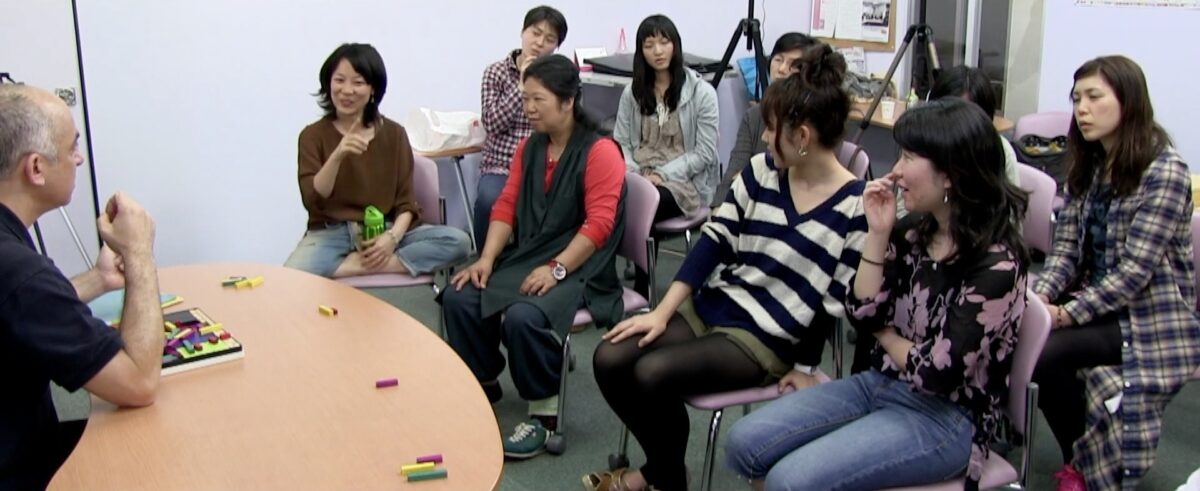
At the moment in this blog, I’m reporting on the workshop I led at IATEFL 2025 in Edinburgh: ‘Teaching speaking as a skill: innovative ways of correcting’. I showed a series of short films from real classes, and the fifty or so participants discussed what we’d watched.
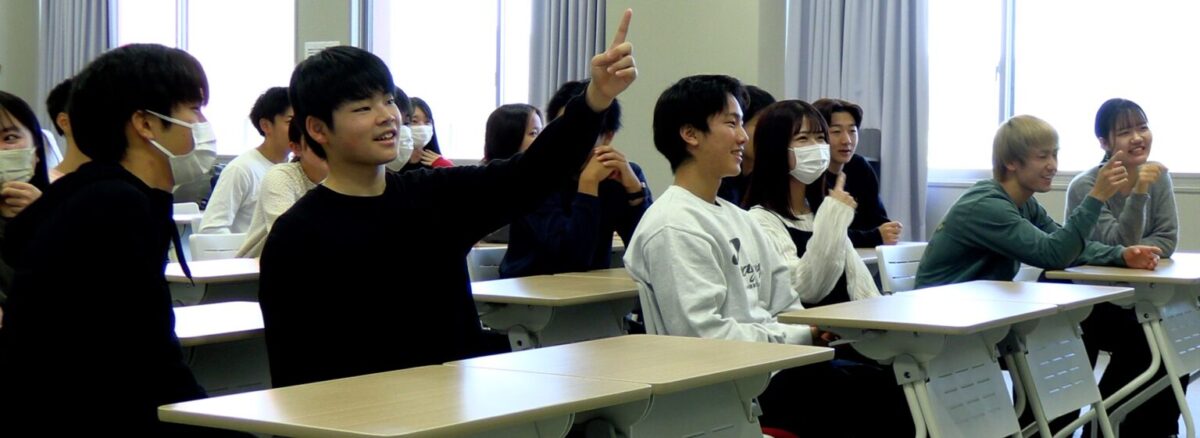
Here’s the fourth film. It’s from a large class of about 30 Japanese first year University students studying for one of the professions allied to medicine.
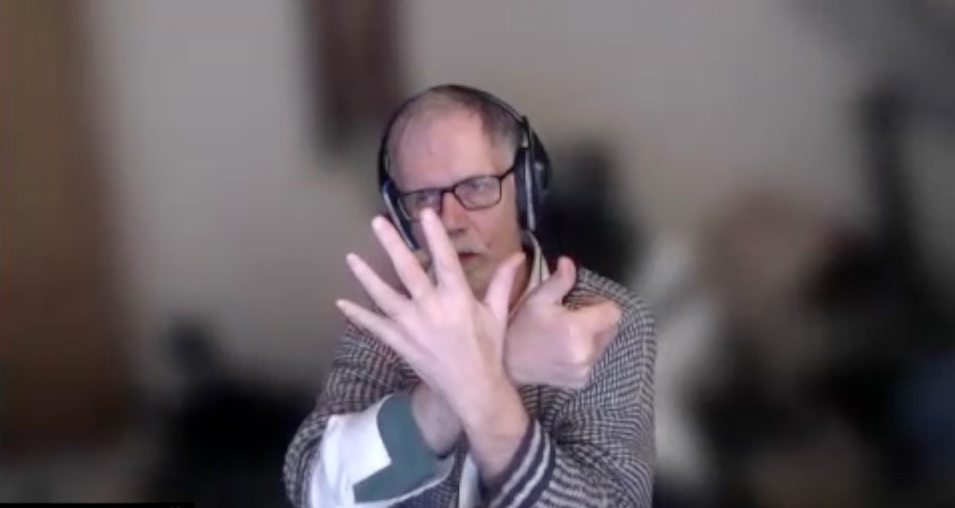
This was the first time this class had worked with this teacher. And we noted how intuitive the use of fingers is – you don’t need to explain anything and its easy to do for large or small classes.
We also reflected on the fact that the teacher didn’t give a rule or acronym for how to order adjectives. These students had all had 8 years or so English at school and had certainly been told about this rule. What they won’t have had is much experience of speaking English and of constructing sentences spontaneously about changing situations. So that’s the experience this teacher was trying to provide – no text book and no notes, just speaking.
One of the participants thought that her students would react badly to the moment when the teacher got everyone to clap the student’s attempt. Which reminds us that the context of each class is important and we need to be in touch with what is going to build rapport with each group of students. Having said that, the video demonstrates that for this class in this context the teachers’ action was effective and supportive.
Video of this complete lesson, including reflection from the teacher and student feedback is available so you can see how the teacher built to this point and how he got and kept the students engaged. Click here for the whole lesson.
We never know for certain what students are thinking. All we can do is observe them and what they do and learn to develop good guesses about what might be going on in their minds.
At the moment in this blog, I’m reporting on the workshop I led at IATEFL 2025 in Edinburgh: ‘Teaching speaking as a skill: innovative ways of correcting.
I showed a series of short films from real classes, and the fifty or so participants discussed what we’d watched. Here’s the third film.
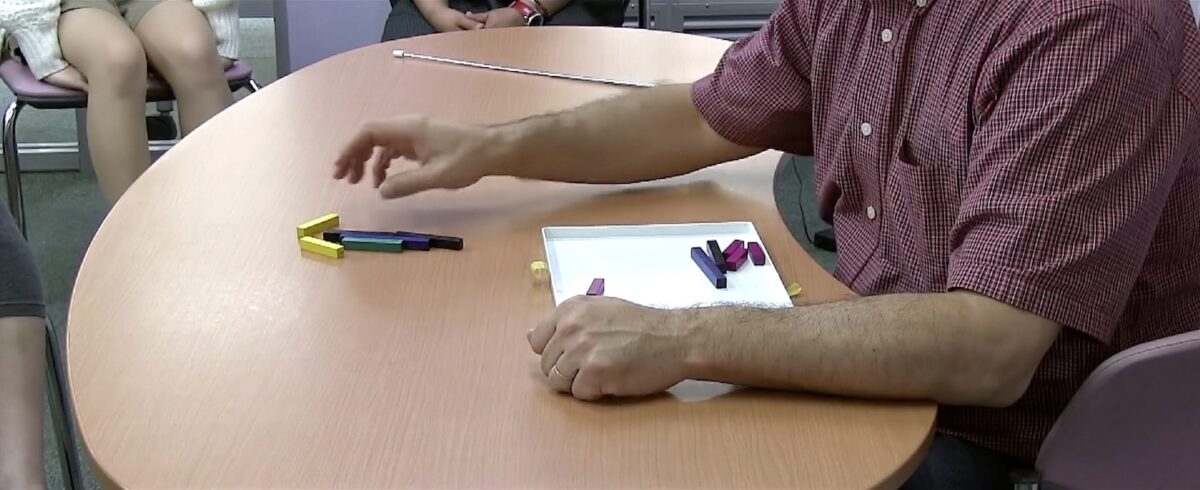
In this short piece of work the teacher worked on the distinction between ‘a’and ‘the’. A difficult thing for Japanese speakers because Japanese doesn’t have articles at all.
In the discussion someone made the excellent point: ‘how do we know the student has learnt the distinction?’ And, of course, we don’t actually know from what we see in this clip, though the student’s tone of voice perhaps gives a clue.
And in response to my question back to the group: ‘How would you find out if they’d got it?’ The participant said ‘I’d probably give them a test’. Of course, what we saw on screen was a sort of test and the one thing we do know for certain is that at the start of that test, that particular student wasn’t secure in the ‘a’/’the’ distinction.
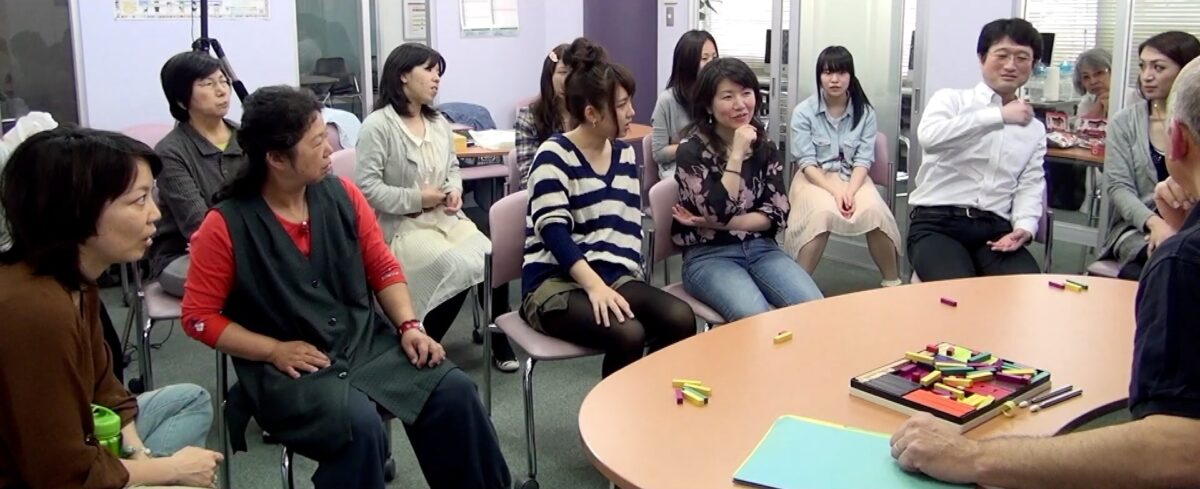
Of course, one of the advantages of Cuisenaire rods is you can endlessly and instantly generate as many ‘tests’ of this kind of distinction as you think useful. And such tests aren’t confounded by the addition of a lot of content vocabulary. And the students get instant feedback on their attempts. And there’s no marking to be done afterwards.
An experienced teacher can often intuit or make a good guess as to what’s going through a student’s mind if she observes the students carefully. So long as we keep an open mind about our guesses then this is vital: it guides us to what to do next to keep that student and the class as a whole progressing. And if we guess wrong, we’ll find out soon enough the next time the student or the class needs whatever we have been working on.
So what do you think? How do you know if students have grasped what you’re hoping they have from your teaching?
Are Cuisenaire rods old-fashioned in an English class? Or does their simplicity make the functional vocabulary (ie the grammar) stand out?
At the moment in this blog, I’m reporting on the workshop I led at IATEFL 2025 in Edinburgh: ‘Teaching speaking as a skill: innovative ways of correcting!
I showed a series of short films from real classes, and the fifty or so participants discussed what we’d watched.
I blogged about the second film the other day, but I’m writing about it again to day because there’s more to be reported from the discussion. One of the participants felt very strongly that it wasn’t appropriate for a teacher to use old-fashioned things like Cuisenaire rods in this day and age. I guess the word ‘rod’ was felt to be not particularly useful and perhaps the work not particularly communicative or engaging. Others noted that ‘rod ‘could be anything …
My take on this is: watch the film and look at the students. Are they engaged? Are they interested in what they are doing? Are they working hard? Do you think they’re learning? Doesn’t the simplicity of the objects throw into focus the functional vocabulary ie that which carries the grammar of English?
Are the distinctions between ‘speaking tasks’ and ‘grammar tasks etc useful? or is the goal that people speak good English sufficient ?
Over the next few weeks I’m reporting on the workshop I led at IATEFL 2025 in Edinburgh: ‘Teaching speaking as a skill: innovative ways of correcting’.
I showed a series of short films from real classes, and the fifty or so participants discussed what we’d watched. You can see the complete playlist here.
Here’s the second film.
Some people were impressed by how the teacher gave the students time to try for themselves, and how he acted to disambiguate ‘two’ and ‘too’.
One participant asked ‘Was this a speaking task or a grammar task?’. I don’t think this teacher makes these kinds of distinctions. So I checked with the teacher, and I’m right: students talk all the time in his classes and his aim is that everything they say is said well. So the distinction isn’t really relevant.
What do you think? Are the distinctions between ‘speaking tasks’ and ‘grammar tasks useful? or is the goal that people speak good English sufficient ?
I’m reporting on the workshop I led at IATEFL in Edinburgh on 14 April 2025. Can you spot the teaching mistake in this video?
Over the next few weeks I’m going to report on the workshop I led at IATEFL 2025 in Edinburgh: ‘Teaching speaking as a skill: innovative ways of correcting!
I showed a series of short films from real classes, and the fifty or so participants discussed what we’d watched. You can see the complete playlist here.
Here’s the first film.
Participants were interested to see how you can use your fingers (a free resource you always have with you!) to work on connected speech. And speculated about other uses we might find for our fingers in the language classroom.
We watched this clip a second time, because I think there’s a teaching mistake worth discussing in it (I’m allowed to say that because it’s me teaching).
For example: some people thought I should have shown more interest in the student’s friends. Personally, I don’t agree with this: I’m an English teacher, not his social secretary. I think it’s better to stay out of the conversation and keep my focus on the language.
Other people thought I should have done less and let the student find the problem himself. I agree with this. The principle ‘the less I do the more they do’, is a good one.
But I think there’s another teaching mistake in it. What do you think it might be? Put your suggestions in the comments below.
Helping an advanced student sound more English with ‘The Gruffalo’
I’ve been working with an advanced student whose English is very good. Virtually all of what she say is grammatically correct, with appropriate vocabulary, and it’s perfectly understandable, but … it just doesn’t sound English – it retains the fundamental character of her native language. And she’s living in an English-speaking country and wants to ‘sound English’.
It’s a pity, because, had her teaching at school worked on the fundamental mechanisms of English speech, then most of these problems would have been dealt with long ago:
rhythm and melody
individual sounds
the relationship between English sounds and English spellings
Fortunately we’ve found a perfect text that gives us just what we need to work on these areas: The Gruffalo by Julia Donaldson and Axel Scheffler.
Why is this such a perfect text for this advanced students?
the story is of no consequence and neither vocabulary or idiom are a problem
the text has a slightly heightened, but very characteristic, English rhythm
it contains sentences – questions, answers, statements, exclamations, reported speech – all of which need their own particular melody
there are plenty of words where the correspondence between spelling and sounds isn’t obvious
she is more than happy to read the story many, many times – indeed she is going to, because it is a bedtime story for her young kids
So, paradoxically, the very inconsequentiality of the story frees this advanced student to work exclusively on rhythm, melody and sound.
We’ve been working through the text, sentence by sentence, focussing on how she is using her body to:
make a breath-push on stressed syllables
say unstressed syllables on ‘the remnants of the breath’
activate an appropriate melody for each phrase
change the shapes she’s making with her lips, jaw, and tongue to improve the individual sounds she’s making
strengthen her criteria for sounds <=> spellings where this is misleading her
This is patient but fascinating work: we have to get these fundamentals right; and then practised with full attention; and then left for the mind to do its job of integrating what we’ve worked on. And, of course, these fundamentals apply to any English sentence, so working in a detailed way on this text is retraining her for anything else she wants to say.
The beauty of working on a text like this is that the fundamentals are met anew on every page; giving lots of varied practise, which gradually cumulates. And, step by step, this work is starting to influence the student’s spontaneous speech. There are some deeply ingrained habits here, which won’t be rectified overnight, but with sustained work, we see (or rather hear) progress.
The very simplicity of a text like this lets us focus on the most fundamental language skill of all – the use of the body.
We wanted to find out if it was possible to create interactive virtual classrooms for the Silent Way using gaming technology. It is! And we now have virtual classrooms for British English, American English and French
At the beginning of April, Roslyn Young and Piers Messum of Pronunciation Science Ltd and I started work on the possibility of creating virtual classrooms using gaming technology, to teach online using the Silent Way. None of us had any experience of the online gaming world, but it clearly had possibilities.
We now have virtual classrooms for British English, American English and French, designed to be used alongside video conferencing such as Skype or Zoom. These classrooms accommodate up to eight people and are completely interactive – everyone can move or manipulate the objects in the classroom together: they really are shared, virtual spaces. These classrooms can be used to work on every aspect of the language:
pronunciation
every aspect of the functional vocabulary (ie grammar)
spatial relationships, temporal relationships, family relationships etc
the calendar, the clock, comparisons, numbers, doubt, guessing etc
free conversation led by the students
spelling
They have been thoroughly tested for use with a student 1:1 and we’ve started testing them with groups of students with promising results. My report on this process and the lessons learnt, Teaching with the Silent Way in Virtual Classrooms/Enseigner en silence dans des sales de classe virtuelles, June 2020 is available, please click here.
Just one example
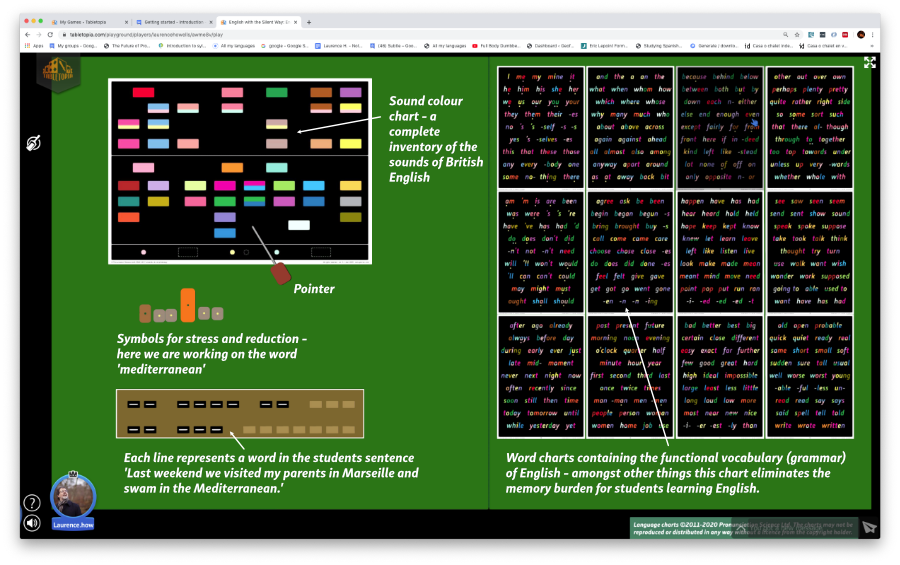
Below is a screenshot from the British English classroom in use. In this case we were working on a student’s sentence, which after the process described below became something like: ‘Last weekend we visited my parents in Marseille and swam in the Mediterranean’. (NB. This has been adapted from the student’s actual sentence to preserve anonymity.)
All the elements you see in the classroom, except for the green background, can be dragged in or out of the view as required, and in response to whatever need becomes evident for the class. These are just a few of the tools available, but they are some of the most useful. In fact the pointer is the most used tool – it is used all the time to draw attention to an object or sound or word, point to where there might be errors, for looping gestures inviting the students to change the rhythm of what they are saying, or for gestures inviting the student to slow down and work on every single syllable one by one etc etc.
We started with the student’s original version, represented it as ‘word lines’ on the brown tray, used pointing on the relevant word lines and on the word charts to enable the student to correct any grammatical mistakes, used the sound colour chart (which was already familiar by this stage in the course) plus actual gestures (using the Zoom video) to work on any sounds that needed improvement and to solve most of the problems with stress and reduction. One word ‘Mediterranean’ needed more detailed work, so we used the syllable symbols to work on how many syllables it had, where the main stress was, where the reduced sounds were and where the full but unstressed vowel was.
Once these details were established, the student practiced saying the complete sentence, trying to keep all these elements sounding native-like. Holding the whole sentence in the mind and using their vocal apparatus to say the complete sentence required a lot of presence. But practising in this way charges the mind with correct grammar and good pronunciation and, cumulatively, as the students work on more and more sentences, grows their intuitive know-how of how to express themselves in English.
A shared virtual space
The key thing that these classrooms create is a shared, but virtual, space, where teachers and students can see, manipulate and point to objects and charts, wherever the participants actually are in the world. Why is this important? Because:
we can avoid writing or aural imitation to teach pronunciation: by pointing to the charts in the classroom and gestures, we can train students to use their muscles in the way natives do to make the sounds and energy patterns of that language. This makes it much easier for them to escape the grip of their own native speech and spelling patterns.
meaning comes first: students’ perception of what they see in the classroom means that meaning can be established unambiguously before the language is introduced – a far faster, easier and more reliable way of establishing the association between meaning and language for beginning students than alternatives such as translation or explanation. In the case of the lesson described above, where the student was sufficiently advanced to launch his own sentence, meaning came first from their memory of the events of last weekend and we used the tools in the classroom to shape language to express their thought accurately and correctly.
memorisation is minimised: instead students acquire the language through familiarity. That’s why the word charts are so useful – students can get used to the entire functional vocabulary of English without any need to memorise – by pointing on the charts and saying their sentences out loud they gradually become familiar with all these words and their use.
trial and error, feedback and self-correction builds students’ mental models of the language: by pointing, the teacher can visually guide the student to where a correction is needed and where to seek for the solution. And once it is corrected the student can practice the correct version until they have charged their mind with accurate and correct language. Not only that, everyone else can see and contribute and learn from the same process. And, of course, students can point too and this is invaluable in showing their thinking and in reinforcing how the language works.
everyone is working all the time: because nothing is written down, everyone has to hold the sentence that is being worked on in their mind, and that leaves a much stronger trace in their minds.
Each virtual classroom contains a lot of different tools designed to make it easier to teach different aspects of the language, but it is the interactive space, virtual, but shared amongst the participants, rather than the plethora of tools, which makes it so effective.
There is potential here both short term – to mitigate the current constraints of the pandemic on people sharing real spaces together – and longer term – to make it possible to teach remotely using the techniques and resources developed by Silent Way teachers over the last half century.
Please contact me if you would like to find out more, or if you would like to learn English or French remotely using the Silent Way. My email is laurence@allmylanguages.com.
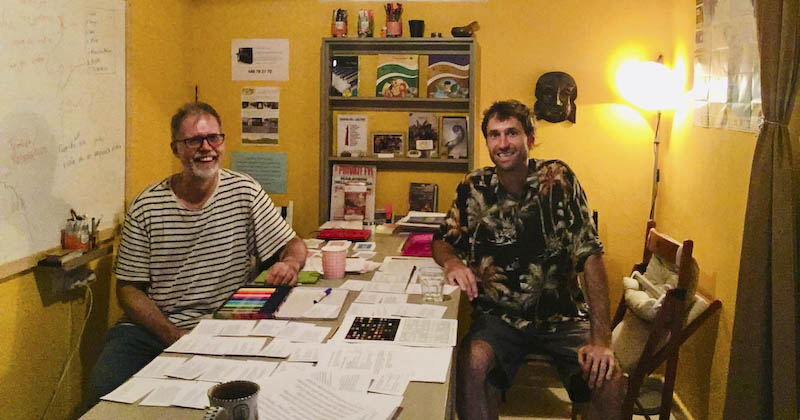
I was privileged to visit Nico Argentato’s language school in Cádiz again at the end of August 2019. The main purpose was to share with Nico some approaches to teaching pronunciation in general, and specifically English. We also took the opportunity to continue our research in how to teach Spanish pronunciation. And, of course, I was privileged to work with some of the students there on their English.
The workshop was based around about roughly 85 ‘Questions without Answers’. By that title I meant that the ‘answers’ have to be found by the participant or participants either because they have to find them for themselves (perhaps with some guidance) within their own mouths or bodies or from their own experience.
Some of the questions were very specifically to do with pronunciation, such as ‘Make an extended ‘ssssssss’ in Spanish and then make the similar sound in English … notice the difference in your mouth, the placement of the tongue, the point of constriction with the palate etc … and notice the difference in the sounds.’
The purpose of exercises like this is to sensitise oneself to how the similar but different sounds are made in the different languages by native speakers. And thereby as a teacher be able to help students change what they do in their mouths – once they change what they do, they start to ‘escape the grip’ of their native pronunciation and step by step can sound more English (or whatever language they are learning).
Some of the questions were more general – how do we acquire skills and knowhow. For example, how did we learn now to walk as babies? or how to ride a bicycle?, or how to play a sport? or a musical instrument? Reflection on our own experience is incredibly valuable even if, as usually happens, we have little memory of the process by which we learnt these things. And, of course, we can’t really say we ‘remember’ how to ride a bicycle or whatever – once we have learnt this knowhow we can simply do it when the situation arises.
What we find for knowhows like this is that they are learnt through doing and feedback from the results of our attempts, they are improved and made habitual through practice, and they are refined through use. We also find that often a coach is needed to help us on our journey towards excellence, with the coach provoking awarenesses that there is something to be learned by the student, and providing guidance on things like: where to focus their work, specific exercises or practice to improve particular aspects of their performance, and how to keep in balance their overall development. Above all the coach isn’t the one creating the learning or the knowhow – that is simply the person themselves.
Since language, and specifically pronunciation, is clearly a knowhow, reflecting on matters like this helps us as teachers rethink our practice. Languages should be taught as practical skills and absolutely not as academic subjects. And teachers should stop ‘teaching’ and start ‘coaching’ instead.
Learning pronunciation and learning how better to teach pronunciation isn’t a linear task. So we ran the workshop in a completely non-linear way – each ‘Question’ was printed on a card, and once we’d finished with working on a particular question we said ‘OK what aspect do we feel we should work on next?’ and then we looked for a card with a question that seemed relevant to that particular aspect. And so we continued ranging freely over the entire subject. A couple of times we reviewed the remaining cards and found we’d covered some of them already in our reflection on other questions. And towards the end of our weekend we repeated this review to identify what still needed to be covered (which was surprisingly little).
An incredibly valuable weekend … hard work but very enjoyable. We’re thinking of perhaps offering the workshop to others in the future. But for now … ¡Gracias a Nico por la oportunidad!
I was very struck again the other day with how important it is for people learning English to master its very unusual stress system – something speakers of other languages usually find bizarre and difficult.
The English stress system
In English some syllables are stressed by means of an abdominal push, making those syllables more prominent in a sentence. The really unusual thing about English is what happens to the other syllables – most of these syllables end up being produced with very unclear, low energy vowel sounds (so-called ‘reduced vowels’), which are hard to hear and often almost non-existent. Often you can describe these sounds as being produced ‘on the remnant of the breath’ used up on the stress syllables.
For example, in normal speech:
‘Tea for two and two for tea’ becomes ‘Tea f. two .n two f. tea’
I was working with a Spanish native speaker taking whatever sentences she wanted to say and working on their pronunciation. After we’d worked on a few sentences, she came up with:
‘I’m very grateful to have this opportunity’
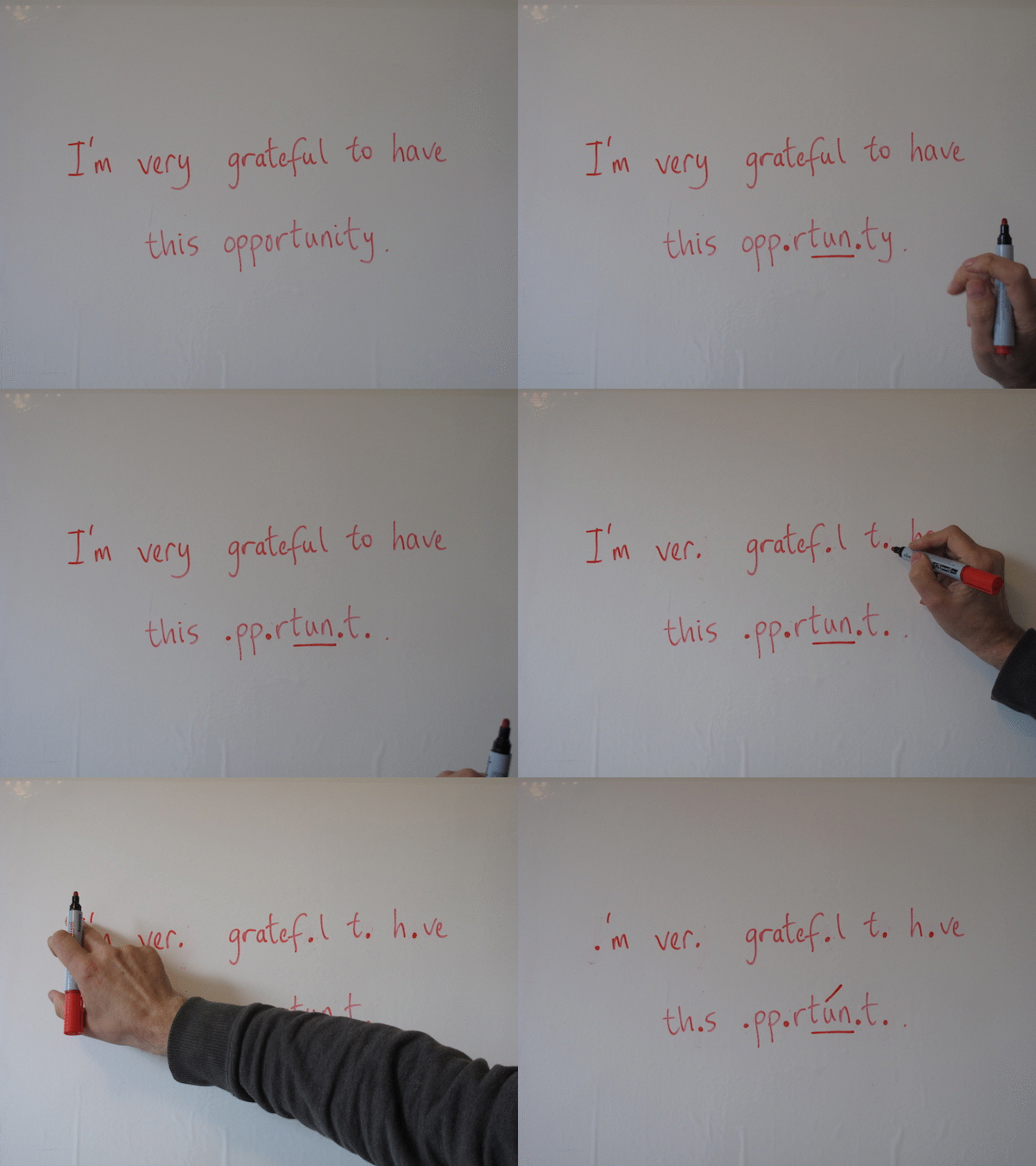
… which was in itself a very nice thing to say, and a really good example to work on. I wrote the sentence on the white board and we started off by making some small adjustments to the vowel and the /r/ sound in ‘very’ until that word sounded natural and then we started working on sentence and word stress.
I asked her which was the most important word in the sentence and she said ‘opportunity’. Of course, there is a choice here – if the speaker wanted to particularly stress her gratitude then ‘grateful’ would be the word most stressed. This is an important point – sentence stress is one mechanism used in English to express aspects of our mood or emotion or what we want to emphasise.
I then showed her the syllables in ‘opportunity’ which I analysed as four syllables:
‘o ppor tun i ty’
… and asked her to identify the stressed syllable which she did, correctly identifying the syllable ‘tun’.
For simplicity I replaced all the unstressed vowels with dots so that we had:
‘.pp.TUN.t.’
From a technical perspective, this might be going a bit too far – strictly speaking, for normal speed speech, the first vowel would probably be better shown as an unstressed full vowel. However, for pedagogical reasons, because this effect of reduction is so strange to Spanish speakers I chose this presentation.
She had some difficulty with saying this! The first thing we worked on was the mechanism of the abdominal push to put the stress on the syllable ‘tun’. Putting her attention on that physical mechanism solved most of the problem. However, articulating the syllable ‘p.t’ remained a bit of a challenge. What I was looking for was the minimum sound between the consonants that maintained a distinct syllable – to make this ‘open transition’ (see Catford, A Practical Introduction to Phonetics 2001, p111). I showed her how to learn how to say this sound by first stuttering ‘ppppppppt’, and then gradually reducing the number of ‘p’s until she could say ‘p.t’.
Once that was mastered it wasn’t too difficult for her to say the whole sentence which I presented as:
‘.’m ver. gratef.l t. h.ve th.s .pp.TUN.t.’
… which, as before, for pedagogical reasons I presented with probably the maximal number of reduced vowels. I supported her saying this sentence by showing the speed and rhythm of the sentence by tapping on the board and then by gestures indicating the flow.
What’s interesting about this experience is that she was able at the end to say the sentence, sounding completely natural in English, without me ever saying any part of the sentence myself. Indeed, because we were focusing throughout on how she used her own vocal apparatus and what it feels like from the inside, me providing an aural model would have been a distraction and a hindrance. She has to do this work herself to establish for herself a new set of habits for how you speak English.
Why is this important?
Finally, is it important that students know how to produce these tiny, unclear, indistinct vowel sounds? … after all it seems such a small thing. Yes, it absolutely is important! Because:
spoken English is incomprehensible unless people can hear these mumbled sounds. What would you make of hearing this set of sounds: ‘.’m ver. gratef.l t. h.ve th.s .pp.TUN.t.’ if you were a Spanish speaker for whom your lifetime’s experience is of a language where every vowel is clear and distinct, unless you yourself had developed the awareness that this is how english is spoken?
the best way to learn to hear the sounds of a language is to first learn how to make them. Once you know how to make them, the ability to hear them accurately seems to be unlocked – until then, you tend to hear them through the ‘filter’ of your own mother tongue (ie you hear them as what seems to you to be the nearest approximation in your mother tongue).
if you try to speak English without using reduced vowels you will sound laboured and difficult to understand, and one of the key mechanisms English speakers use to express emotion and emphasis will be denied to you.
reduced syllables are one way English speakers use to save energy, enabling you to say ‘.’m ver. gratef.l t. h.ve th.s .pp.TUN.t.’ with only one stressed vowel (in the syllable <TUN>) and only one other full vowel (in the syllable <grate>). If you don’t make the reduced syllables you’ll get more tired than you need to when you speak English!
finally, reduced syllables are not some minor part of English – in normal speech they consist of over 50% of the sounds of English.
It’s worth it, and it’s not difficult to teach when you know how!