With pronunciation you have something you can work on – how students sound. With listening, you never know what they’ve heard so you’ve no easy way of intervening.
It’s pretty obvious that if students’ pronunciation is poor, they are probably going to find it hard to decode what’s being said to them–their mental image of the language is probably distorted.
We can’t work directly on what people hear or what they make of what they hear: it happens inside their heads. But with pronunciation we have something to work on: how they sound. And we can improve that by training how they use themselves when speaking English. So that gives teachers a place to start helping students with listening.
If we work properly on pronunciation–in English especially reductions, stress, contractions, connected speech and intonation–then as well as training students how to use their mouths and muscles we are also helping them to build better mental representations of how English sounds. And every time they open their mouths and speak well, they will be reinforcing these mental images. Once their pronunciation is good, then they stand a chance of decoding what they hear.
They’ll still need some specific training–every type of skill needs its own particular development and practice, and speaking and listening are distinct skills. And they’ll need to grow their vocabulary. Nevertheless they will have what is the key foundation on which to build.
What’s more, it’s two for the price of one! They improve their pronunciation and at the same time they lay the foundations for listening,
Therefore, before you start working on listening, work on students’ pronunciation.
How do we learn skills? By rules or by trial and error and feedback?
At the moment in this blog, I’m reporting on the workshop I led at IATEFL 2025 in Edinburgh: ‘Teaching speaking as a skill: innovative ways of correcting’. I showed a series of short films from real classes, and the fifty or so participants discussed what we’d watched.
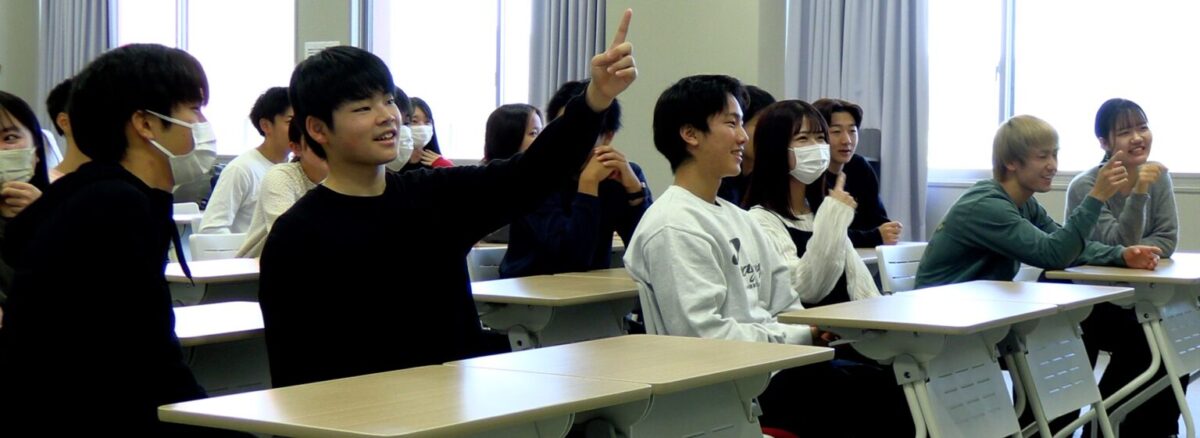
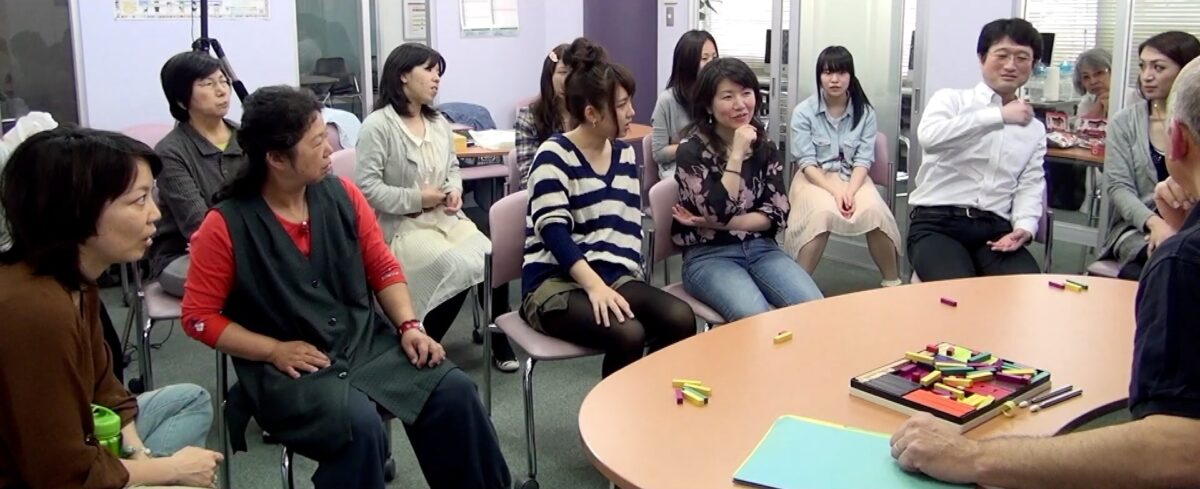
Here’s the fourth film. It’s from a large class of about 30 Japanese first year University students studying for one of the professions allied to medicine.
This was the first time this class had worked with this teacher. And we noted how intuitive the use of fingers is – you don’t need to explain anything and its easy to do for large or small classes.
We also reflected on the fact that the teacher didn’t give a rule or acronym for how to order adjectives. These students had all had 8 years or so English at school and had certainly been told about this rule. What they won’t have had is much experience of speaking English and of constructing sentences spontaneously about changing situations. So that’s the experience this teacher was trying to provide – no text book and no notes, just speaking.
One of the participants thought that her students would react badly to the moment when the teacher got everyone to clap the student’s attempt. Which reminds us that the context of each class is important and we need to be in touch with what is going to build rapport with each group of students. Having said that, the video demonstrates that for this class in this context the teachers’ action was effective and supportive.
Video of this complete lesson, including reflection from the teacher and student feedback is available so you can see how the teacher built to this point and how he got and kept the students engaged. Click here for the whole lesson.
We never know for certain what students are thinking. All we can do is observe them and what they do and learn to develop good guesses about what might be going on in their minds.
At the moment in this blog, I’m reporting on the workshop I led at IATEFL 2025 in Edinburgh: ‘Teaching speaking as a skill: innovative ways of correcting.
I showed a series of short films from real classes, and the fifty or so participants discussed what we’d watched. Here’s the third film.
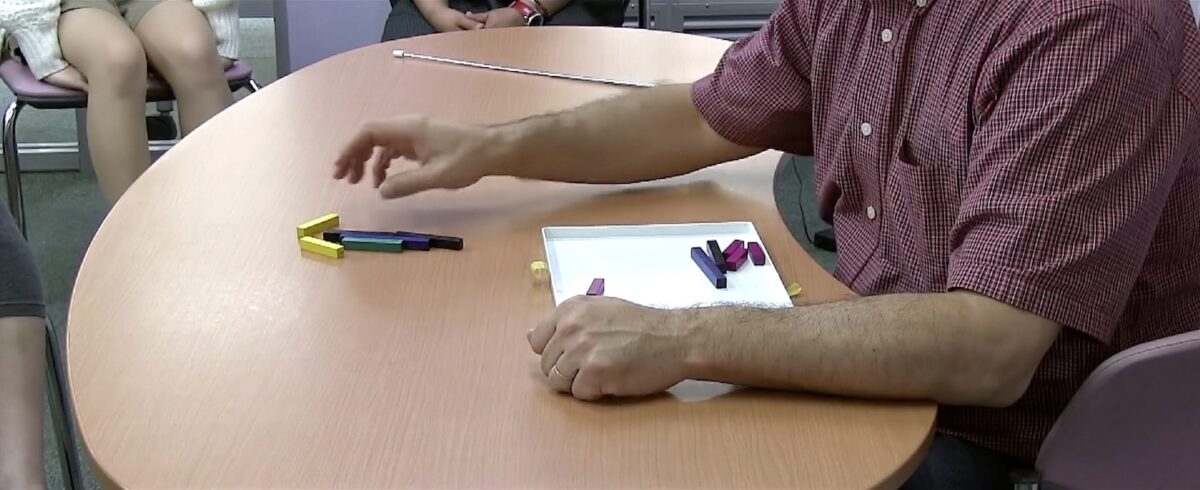
In this short piece of work the teacher worked on the distinction between ‘a’and ‘the’. A difficult thing for Japanese speakers because Japanese doesn’t have articles at all.
In the discussion someone made the excellent point: ‘how do we know the student has learnt the distinction?’ And, of course, we don’t actually know from what we see in this clip, though the student’s tone of voice perhaps gives a clue.
And in response to my question back to the group: ‘How would you find out if they’d got it?’ The participant said ‘I’d probably give them a test’. Of course, what we saw on screen was a sort of test and the one thing we do know for certain is that at the start of that test, that particular student wasn’t secure in the ‘a’/’the’ distinction.
Of course, one of the advantages of Cuisenaire rods is you can endlessly and instantly generate as many ‘tests’ of this kind of distinction as you think useful. And such tests aren’t confounded by the addition of a lot of content vocabulary. And the students get instant feedback on their attempts. And there’s no marking to be done afterwards.
An experienced teacher can often intuit or make a good guess as to what’s going through a student’s mind if she observes the students carefully. So long as we keep an open mind about our guesses then this is vital: it guides us to what to do next to keep that student and the class as a whole progressing. And if we guess wrong, we’ll find out soon enough the next time the student or the class needs whatever we have been working on.
So what do you think? How do you know if students have grasped what you’re hoping they have from your teaching?
Are Cuisenaire rods old-fashioned in an English class? Or does their simplicity make the functional vocabulary (ie the grammar) stand out?
At the moment in this blog, I’m reporting on the workshop I led at IATEFL 2025 in Edinburgh: ‘Teaching speaking as a skill: innovative ways of correcting!
I showed a series of short films from real classes, and the fifty or so participants discussed what we’d watched.
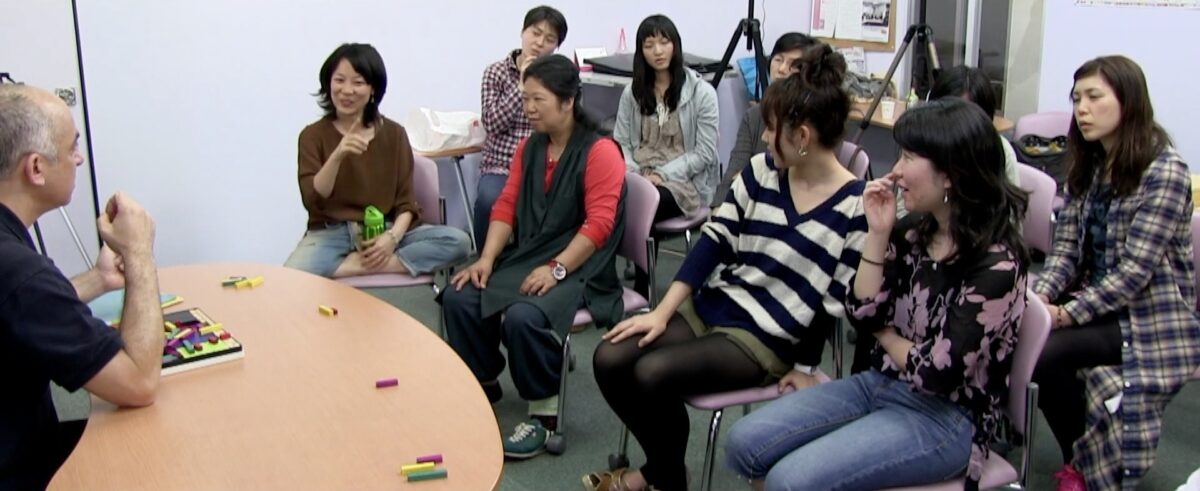
I blogged about the second film the other day, but I’m writing about it again to day because there’s more to be reported from the discussion. One of the participants felt very strongly that it wasn’t appropriate for a teacher to use old-fashioned things like Cuisenaire rods in this day and age. I guess the word ‘rod’ was felt to be not particularly useful and perhaps the work not particularly communicative or engaging. Others noted that ‘rod ‘could be anything …
My take on this is: watch the film and look at the students. Are they engaged? Are they interested in what they are doing? Are they working hard? Do you think they’re learning? Doesn’t the simplicity of the objects throw into focus the functional vocabulary ie that which carries the grammar of English?
Are the distinctions between ‘speaking tasks’ and ‘grammar tasks etc useful? or is the goal that people speak good English sufficient ?
Over the next few weeks I’m reporting on the workshop I led at IATEFL 2025 in Edinburgh: ‘Teaching speaking as a skill: innovative ways of correcting’.
I showed a series of short films from real classes, and the fifty or so participants discussed what we’d watched. You can see the complete playlist here.
Here’s the second film.
Some people were impressed by how the teacher gave the students time to try for themselves, and how he acted to disambiguate ‘two’ and ‘too’.
One participant asked ‘Was this a speaking task or a grammar task?’. I don’t think this teacher makes these kinds of distinctions. So I checked with the teacher, and I’m right: students talk all the time in his classes and his aim is that everything they say is said well. So the distinction isn’t really relevant.
What do you think? Are the distinctions between ‘speaking tasks’ and ‘grammar tasks useful? or is the goal that people speak good English sufficient ?
I’m reporting on the workshop I led at IATEFL in Edinburgh on 14 April 2025. Can you spot the teaching mistake in this video?
Over the next few weeks I’m going to report on the workshop I led at IATEFL 2025 in Edinburgh: ‘Teaching speaking as a skill: innovative ways of correcting!
I showed a series of short films from real classes, and the fifty or so participants discussed what we’d watched. You can see the complete playlist here.
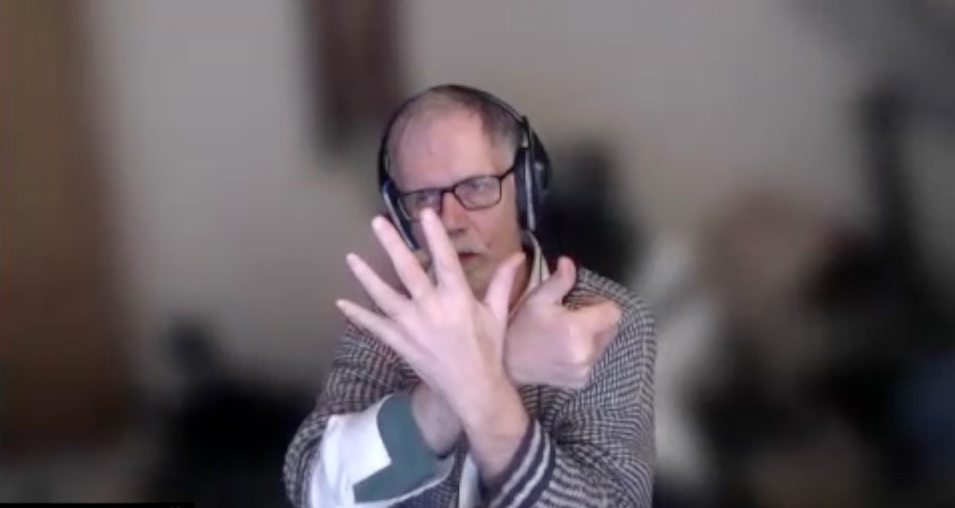
Here’s the first film.
Participants were interested to see how you can use your fingers (a free resource you always have with you!) to work on connected speech. And speculated about other uses we might find for our fingers in the language classroom.
We watched this clip a second time, because I think there’s a teaching mistake worth discussing in it (I’m allowed to say that because it’s me teaching).
For example: some people thought I should have shown more interest in the student’s friends. Personally, I don’t agree with this: I’m an English teacher, not his social secretary. I think it’s better to stay out of the conversation and keep my focus on the language.
Other people thought I should have done less and let the student find the problem himself. I agree with this. The principle ‘the less I do the more they do’, is a good one.
But I think there’s another teaching mistake in it. What do you think it might be? Put your suggestions in the comments below.
You don’t need much (if any) language to communicate, so we should aim for much more in our language teaching.
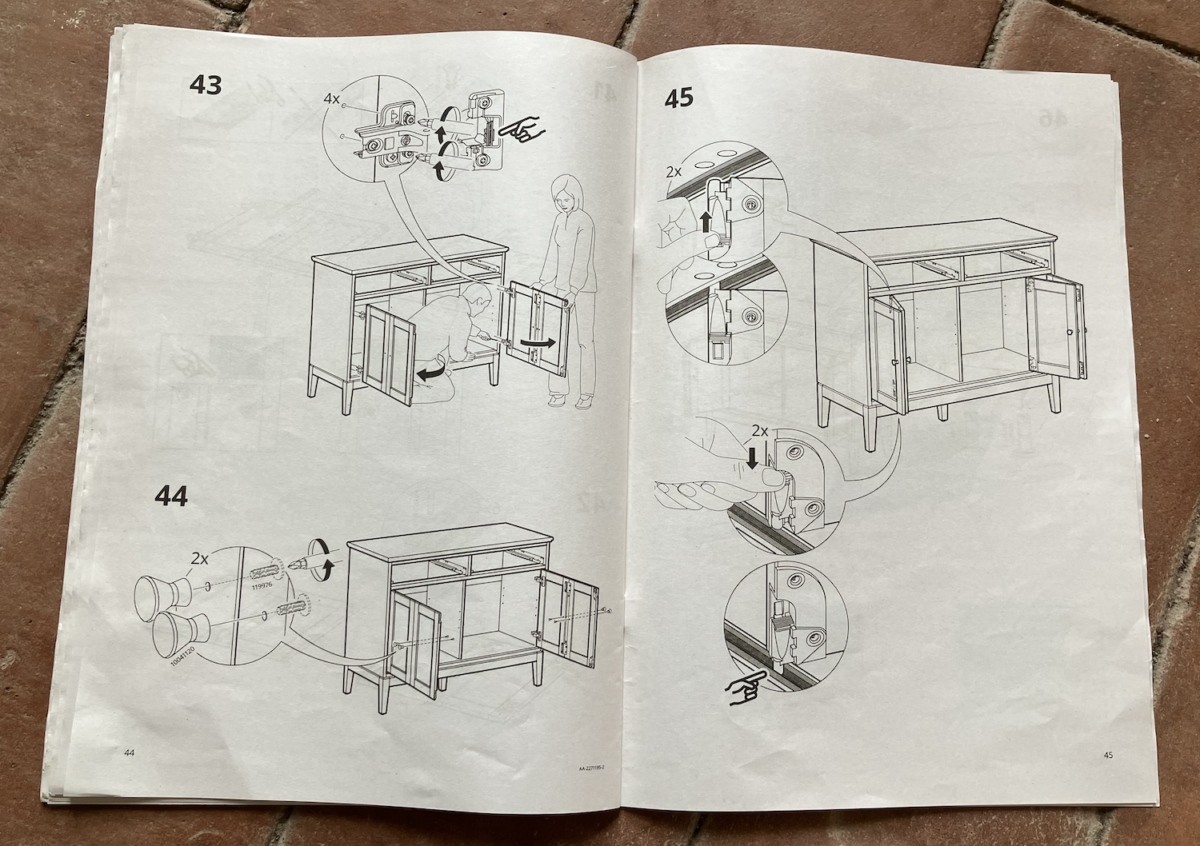
I just put together an IKEA cupboard. The instructions were fairly easily to follow and I managed the job with almost no backtracking.
Above is a shot of a typical page from the instruction booklet. As everyone knows, there aren’t any words in IKEA instructions: IKEA manages to communicate without language. Which should make us pause a little when anyone trots out the popular phrases that ‘language is about communication’ and ‘mistakes don’t matter so long as communication has taken place’.
We’re setting a very low bar for ourselves if we make that our goal and set such a standard for ourselves and our students. As my example makes clear communication can happen, and often does without any language at all. And communication may or may not happen even if what I say is incorrect or ungrammatical.
We should aim higher than that. We should aim that our students learn how to say what they want to say, correctly and with ease. Then they’ll have as good (or as poor) a chance of successfully communicating as they do in their native language.
That demands more of us as teachers. We have to arrange our courses so that at every stage:
we give students manageable challenges, that nevertheless, give them choice as to what to say, what to emphasise, what to omit etc. In other words, we give them as much responsibility for the content as possible, but we constrain the situation the class is talking about so they aren’t overwhelmed: a delicate balancing act. Beginners can’t say very much – so we need to constrain the conversation more – but as they progress to intermediate and advanced levels we can allow the conversations to expand.
by giving them the chance to express their ideas we find out what they can do. But then by working with the class on their sentences, one-by-one, until they are correct we help them to improve the quality of their language.
It’s a mistake to see accuracy and fluency as in conflict. We want our students to achieve both so they can express themselves freely and well.
It’s always tempting to push the conversation on even though what’s just been said could still yield some more important learning. After all: the learning happens in the gap between incorrect and correct sentences.
In my Japanese lesson earlier today, I’d said a sentence and with help from my teacher I’d corrected it and the conversation had been about to move on. But my classmate stopped the action by saying what became, after a bit of work, the following:
さっきの間違った文をもう一度いいて下さい。
(Please repeat the incorrect sentence from earlier.)
I’d vote this the best sentence ever said in a language class because:
a) the repetition of the original version of the sentence made absolutely clear what the difference between the incorrect and correct sentences was.
b) by ‘stopping the action’ we were able to extract just that bit more learning from what had just happened.
c) not only that, of course, the work to say correctly this rather complex new sentence itself yielded a lot of new learning.
It’s always tempting to push the conversation on to the next thing even though what had just been said could still yield some more important learning.
After all: the learning happens in the gap between incorrect and correct sentences.
The experience of learning to speak a language which you cannot read or write is suprisingly liberating — childlike, even. And seems to bring with it an enhancement of our memory capacities.
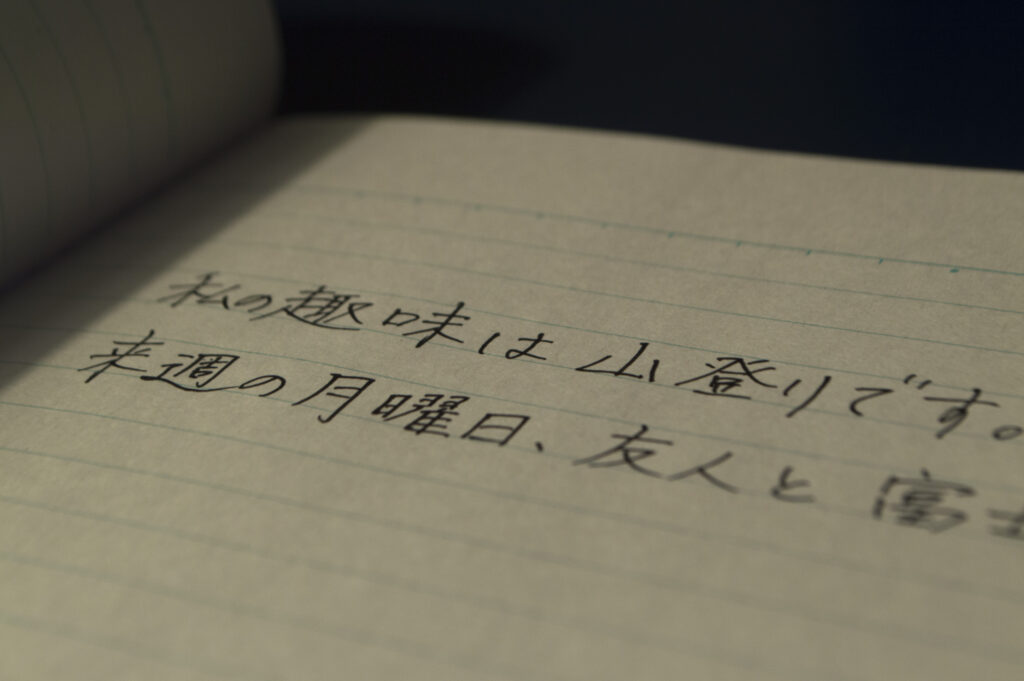
Japanese writing – Takashi Mukoda (see below)
What does it feel like to be illiterate in a language you begin to speak quite well? This must be what young children feel like, when they chat away in their native language before they start reading. And this must be what everyone feels like in a community whose language isn’t written down, or isn’t usually written in normal daily life.
As most of us in literate societies, I’m so used to writing and reading in English, and find it so easy to do without thinking, that it is hard to mentally place myself back in that pre-literate state.
Learning through speaking
But, I’m lucky! Learning Japanese with Silent Way Tokyo means I’ve learnt it almost exclusively through the spoken language. This means I that even though I’m beginning to be able to express myself reasonably well in Japanese, I am almost illiterate in the language.
Which feels surprisingly liberating – childlike even! In my lessons, I get to tell my stories, ask questions of others about things I’m curious about, and describe everyday events. All without the need for note-taking, writing down of phrases or sentences, or reading of texts, dialogues or articles.
And I’m surprised at how most of the words and patterns that I experience in this illiterate state stick in my mind, and how the memory of them seems to strengthen, rather than decay over time. In fact it feels as if, learning this way, I’m experiencing something akin to the much-admired memory capacity of unlettered peoples, albeit on a smaller scale.
All this makes me even more inclined to advise language learners to throw away their notebooks, and immediately become more childlike as a result. You don’t need to write things down to remember them. Indeed as Plato has Socrates argue:
You … have … attributed to [writing] quite the opposite of its real function. Those who acquire it will cease to exercise their memory and become forgetful; they will rely on writing to bring things to their remembrance by external signs instead of their own internal resources.
Plato and Walter Hamilton. 1973. Phaedrus. Harmondsworth: Penguin. 275
Afterword on Japanese
Japanese has one feature that makes it particularly well suited to getting this ‘illiteracy experience’: its writing system is extraordinarily difficult to learn. Difficult even for Japanese kids, and they start with the advantage of already knowing the language.
So for the student of Japanese, offered the opportunity to learn the spoken language by speaking, there’s not much temptation to try reading and writing. At the initial stages of learning the language, why would anyone give themselves the exhausting, frustrating and seemingly endless task of learning thousands of kanji and how they combine to represent vocabulary?
Especially if you are given the alternative of learning how to express yourself freely and spontaneously orally? In other words, the opportunity to behave just like children in that society do: learn to speak and only then learn writing and reading.
Actually, I do intend to learn to write and read in Japanese — indeed I’ve already experimented with how to do it (see here) — and I know it’s going to be easier, less exhausting and more efficient to do once I’ve learnt how to express myself orally at roughly the level of the average six-year-old. At which point, I’ll start to work on it more consistently.
And other languages?
The difficulty of the Japanese writing system creates a big incentive for people to learn with a ‘speaking first’ approach … but, of course, the other benefits — a childlike experience and improved memory — are available to anyone learning any language no matter what it’s writing system is like. And it really is worth the experience …
So, throw away your notebooks and text books and guided readers and start really learning through speaking!
Image by Takashi Mukoda https://www.flickr.com/photos/138667019@N07/25162292173/in/dateposted-public/, CC BY-SA 2.0, https://commons.wikimedia.org/w/index.php?curid=47528402
Once you have a reasonable command of the function words, pronunciation and melody in a language, then all you need to do is speak … providing you get good sentence-by-sentence feedback.
Talking about the everyday things that occur in your life, and how you feel about them and what you want to do next is the stuff of everyday conversation. And this is the ideal content for your language lessons once you have reached a reasonable command of the function words, pronunciation and melody in a language.
At this stage, all you need to do is try to talk about whichever of these things that happens to occur to you. Very likely you will make mistakes but if your teacher gives you sentence-by-sentence feedback about where your mistakes are, helps you to fix them and gets you to practice the correct version, then that is all you need to improve.
The syllabus emerges from the process
This process seems to be self-regulating: students seem to have a natural sense of the sentences they can have a reasonable stab at saying at any particular stage. And so they rarely try to say things that really are too far beyond them.
And, as their skills develop, they seem to naturally feel the urge to be more ambitious: to add more detail, to add shades of meaning or emotion and to express more complex ideas on a wider range of topics. So in this way, they end up continually working at level i + 1 (to steal Krashen’s formulation, though he was talking about ‘input’ and a very different, and incompatible, set of ideas about language learning, see Payne, 2011 for one critique of Krashen’s theory).
So, like this, we keep progressing but without the need for a pre-planned syllabus.
Just one example
For example, in a recent French lesson one of my fellow students expressed the opinion that people with gluten intolerance find it ‘difficult to digest gluten’. Of course he said that in French.
Now I could easily have accepted this statement, indeed I might well have done so in a conversation in English, depending on the context. But, since it’s not quite true for me, I felt the need to try to reply with something like ‘No! It’s an autoimmune condition. So when coeliacs take something with gluten in it, it causes their bodies to attack themselves.’ (In French, of course)
And with a bit of help from my teacher about word choice, order and pronunciation, I got to be able to say this reasonably well in French.
My ‘i + 1’ at that moment
The point is that, at this stage in my gradual progress in French, I felt (intuitively, of course) that I stood a chance of expressing this real thought in that moment. It was, in fact precisely at my ‘i + 1’ — neither impossibly hard nor too easy – just a small step beyond what I could do correctly and accurately myself. Moreover, as would be the case if I tried to say it in English, I started the utterance with no idea of how it was going to end.
Then the process of working with my teacher on this, enabled me to turn it from halting, incorrect French into something that after a few minutes’ work came out as correct and, reasonably fluid, speech. What’s more, it was never written down, so I had to hold it in my mind for the time it took to formulate and practise.
And so, because I had to be present continuously, and mentally engaged every step of the way over a sustained period of time; at the end of the process, I was left with much more than just ‘I know how to say this particular sentence’.
In the language class things don’t have to be artificially ‘interesting’
Now, I doubt that others in the class were especially interested in the detail of this topic, except that, as in any good conversation, it revealed something about my life and concerns. And perhaps something about the topic might have resonated with some parallel experience of illness or disease in others’ lives. As social beings we are inherently interested, curious about, even nosy about the lives of the people we meet.
This is one of the problems that text-book authors face: whatever topics they pick, they’re never going to be anyway near as interesting to its members as what each group of students will come up, with given the chance — no French language textbook includes anything on the difficulties coeliacs face, why would it? Fortunately text books are unnecessary, if we run our lessons in the right way.
So what should the teacher do?
The teacher needs to get the class talking about their actual lives and concerns, occasionally nudge the conversation to keep it going or to move the level up, and make sure everyone gets a chance to contribute. But, keep out of the content – that’s not his or her job.
His or her job is to focus on the language and make sure that what the students say gets corrected, and do that in such a way that they develop better implicit criteria for correctness and accuracy.
What the student is left with afterwards
If we work this way, everything in the process of making the students’ sentences correct is available for their minds to work on afterwards: the things that weren’t correct or accurate and therefore they got feedback on; the variations they tried out on the way to their final sentences; the physical experiences of practising saying out loud something detailed, correct, and accurate.
All of this feeds into the stock of experiences students’ minds draw on to abstract the patterns inherent in the language and construct implicit know-how of how to speak it. The mind hypothesises like this automatically and continuously — we don’t need to do anything more than feed it these kinds of rich experiences.
And so we learn
To advance in a foreign language all we need to do is: try to say things and make mistakes; don’t play safe; pay attention to sentence-by-sentence feedback from our teachers; and practise the correct versions a few times.
The rest will take care of itself: the mind will automatically construct and refine hypotheses about the patterns of the language; and as we grow in the language we’ll continually push our boundaries.
To put it at its most succinct: we learn to speak by speaking.